
Order volume tends to grow in uneven bursts. One month feels manageable, the next starts exposing gaps in how things are handled behind the scenes. This is usually where fulfillment starts to decide how far a business can actually go without friction slowing everything down.
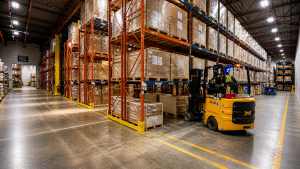
RS Distribution Services has been working in this space since 1994, alongside RS Express which started in 2010. Between both divisions, they handle around 160,000 shipments a year for roughly 575 clients. That kind of volume does not stay consistent without structure behind it. Their 150,000 sq ft warehouse in Winnipeg and a fleet of about 60 vehicles keep things moving across industries that range from automotive parts and construction materials to food products and medical supplies.
Businesses often start looking into services like pick and pack warehousing in winnipeg when their own storage and shipping setup begins slowing down daily operations. It usually shows up as delays stacking up, orders going out in inconsistent timing, or inventory becoming harder to trust.
Why growing businesses find order fulfillment hard to manage
Order fulfillment problems rarely appear all at once. They build slowly as order volume increases and systems that worked earlier stop keeping up.
Increasing order volume creates pressure on packing teams and storage space. What used to be a predictable daily flow turns into uneven spikes. Staff end up rushing during peak times and sitting idle during slower periods. That imbalance leads to mistakes that are hard to catch early.
Inventory management becomes another sticking point. When products move in and out quickly, it becomes harder to maintain accuracy without a structured system. RS Distribution Services reports a 99.8 percent inventory accuracy rate based on physical counts, which shows how consistency matters in environments where small errors can snowball into delayed shipments or missing stock.
Customer experience starts feeling the impact long before internal teams notice it. Late deliveries, partial shipments, and backorders often trace back to fulfillment bottlenecks rather than demand itself.
How fulfillment services manage your orders
Fulfillment services sit between inventory storage and final delivery. The role is not complicated on paper, but execution is where it matters.
Pick and pack operations involve selecting items from warehouse stock, preparing them for shipment, and ensuring each order matches what was requested. RS Distribution Services handles this at scale across multiple industries, including manufacturing and retail distribution.
Order processing and shipping is where timing becomes critical. Orders need to be captured correctly, routed through the system, and dispatched without unnecessary delays. Their use of advanced and reliable warehouse management software supports this flow by keeping inventory and order data aligned in real time.
Returns and reverse logistics often get overlooked until they start affecting operations. Handling returns properly keeps inventory accurate and prevents confusion in stock levels. Businesses that rely on structured reverse logistics tend to avoid the backlog that usually builds when returns are handled manually.
For companies comparing external providers, platforms like fulfilment center services in winnipeg often become part of early research when internal processes start feeling stretched.
How Fulfillment Services Support Business Growth
Growth creates pressure on systems that were never designed for higher demand. Fulfillment services step in by absorbing that pressure without forcing businesses to rebuild internal operations from scratch.
Faster order processing becomes noticeable when warehouse teams operate in a structured environment rather than a reactive one. At RS Distribution Services, order accuracy sits around 99.8 percent, which reflects how controlled workflows reduce errors that typically slow down shipping cycles.
Reduced operational workload is another factor that businesses often underestimate. When storage, picking, packing, and shipping are handled externally, internal teams shift focus toward sales, product development, and customer relationships instead of daily logistics problems.
Demand spikes also become easier to handle. Seasonal peaks or sudden sales increases usually strain internal systems. A warehouse network with established staffing and space can absorb those changes without forcing temporary hires or rushed expansion.
Companies exploring warehousing in winnipeg often reach this point when storage limitations start affecting how quickly they can respond to orders.
The real cost savings of outsourcing fulfillment
Storage space, staff, and transport all carry fixed and variable costs that can become unpredictable during growth periods.
Lower warehousing costs come from shared infrastructure. Instead of maintaining a private warehouse that might sit underused during slower months, businesses use existing space that adjusts to demand.
Reduced labor and infrastructure expenses also play a role. Hiring, training, and managing warehouse staff adds ongoing overhead. External fulfillment setups already have trained teams in place, along with equipment and systems that would otherwise require separate investment.
Predictable pricing models make planning easier. Costs tend to align more closely with actual order volume rather than fluctuating internal expenses. That shift gives businesses more clarity when forecasting margins.
RS Distribution Services also operates within regulated environments, including ISO 9001:2015 and ISO 45001:2018 certifications, along with bonded warehouse capabilities through Canada Border Services Agency. That level of compliance reduces risk for businesses operating in sensitive sectors like food, pharmaceuticals, and manufacturing.
Anyone trying to reach a provider for details or setup discussions can go through Contact Us directly for next steps.
The role of technology in fulfillment work
Fulfillment today depends heavily on how well systems communicate rather than just physical handling of goods.
Real time inventory tracking prevents situations where stock appears available but is already allocated elsewhere. The RS Distribution Services uses Synapse as their warehouse management system, which helps maintain consistent updates across inbound and outbound movement.
Integration with eCommerce platforms allows orders to flow directly into warehouse systems without manual entry. That reduces errors that usually happen when data is retyped or transferred between tools.
Automation improves accuracy in repetitive tasks like sorting, labeling, and routing. While human oversight still matters, reducing manual steps helps maintain consistency across high volume operations.
The combination of 150,000 sq ft of warehouse space and integrated systems allows RS Distribution Services to support industries that rely on precision timing, including automotive supply chains and manufacturing operations.
Points where switching to a fulfillment partner helps
Most businesses wait until problems become visible before considering external fulfillment. By that stage, delays and inventory issues are already affecting customers.
A clear sign is when order volume starts creating backlogs that internal teams cannot clear within normal working hours. Another indicator is when inventory tracking begins relying on manual checks instead of system based accuracy.
Expansion into new regions also creates pressure. Shipping from a single location can become inefficient when customer bases spread across wider areas. A fulfillment partner with established transport routes can reduce that friction.
RS Distribution Services has been operating for over 30 years as a family run business, and long term clients remain with them partly because consistency matters more than short term fixes. One automotive client uses The RS Express as an extension of their own parts department, relying on them to keep vehicle repair timelines on track across a wide customer base.
How to decide your fulfillment strategy
Internal fulfillment gives direct control over every step, but it also concentrates responsibility within the business. That works for smaller operations with stable order volume.
Outsourced fulfillment removes much of the operational pressure tied to storage and shipping. It works better when order volume becomes inconsistent or when product lines expand beyond what internal systems were designed to handle.
Some businesses operate with a hybrid setup. Core inventory stays in house while overflow stock and regional distribution move through external partners. This setup usually develops when businesses want to retain control over certain product lines while reducing pressure on peak demand periods.
RS Distribution Services supports a wide range of industries, from electronics and telecommunications to food packaging and construction materials. That variety matters because different product types require different handling methods, even within the same warehouse environment.
Their inventory accuracy rate of 99.8 percent comes from consistent processes across receiving, storage, picking, and shipping rather than relying on manual adjustments after issues appear.
The decision often comes down to whether internal teams want to continue managing logistics directly or shift focus toward product development and customer acquisition while fulfillment runs in the background.